
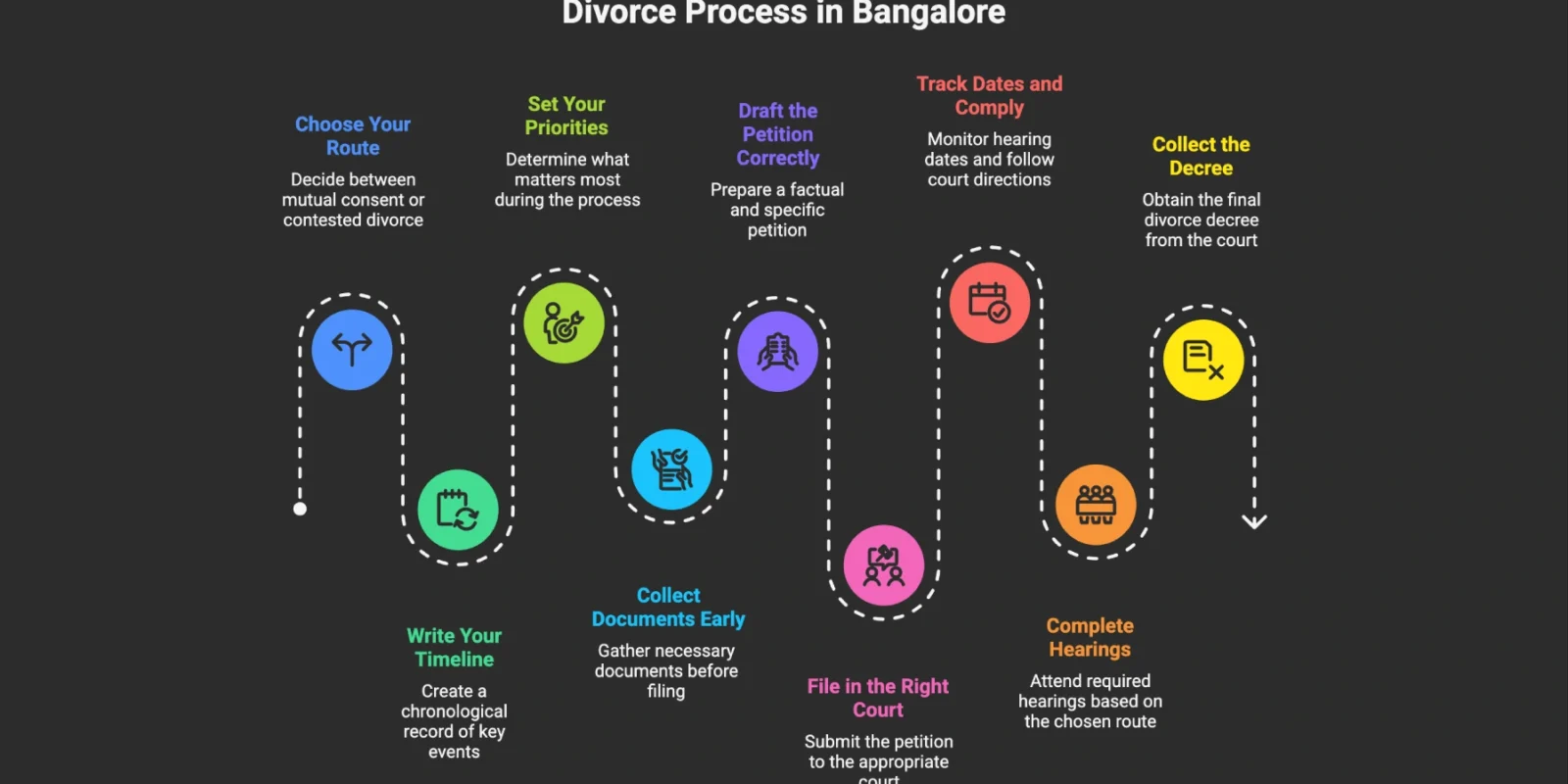
Nobody sits down calmly and researches how to file for divorce in India on a good day. If you’re reading this, you’re probably somewhere between exhausted and overwhelmed. Let’s cut through the confusion and get you the actual process, without pretending it’s simpler than it is.
Mutual Consent vs Contested Divorce
This is the first fork in the road, and it changes everything about timeline and cost. A mutual consent divorce means both spouses agree to separate and on terms like alimony, custody, and property division. A contested divorce means one party doesn’t agree, and the court has to decide based on evidence and specific legal grounds.
Quick answer: To file for divorce in India, you can either file jointly under mutual consent (Section 13B of the Hindu Marriage Act, or equivalent provisions under other personal laws) if both spouses agree, or file a contested petition citing specific grounds like cruelty, desertion, or adultery if one spouse disagrees.
Grounds for Contested Divorce
Depending on which personal law applies to you (Hindu, Muslim, Christian, or Special Marriage Act), grounds vary slightly, but common ones include:
- Cruelty (physical or mental)
- Desertion for a continuous period (usually 2 years)
- Adultery
- Conversion to another religion
- Mental disorder or incurable illness, in specific circumstances
- Not resuming cohabitation after judicial separation
Proving these grounds isn’t always straightforward — courts want evidence, not just allegations, so this part genuinely needs a lawyer’s guidance from the start.
The Mutual Consent Divorce Process, Step by Step
- Both spouses file a joint petition in family court
- Court records statements and grants a “first motion”
- A mandatory cooling-off period of 6 months follows (though courts can waive this in specific circumstances)
- After the waiting period, both parties appear again for the “second motion”
- If both still agree, the court grants the divorce decree
I’ve seen couples get frustrated by the 6-month wait, thinking it’s bureaucratic delay. Honestly, it’s meant to give people a genuine chance to reconsider — and courts have increasingly started waiving it when reconciliation is clearly not possible.
[link to related guide on child custody laws in India here]
Documents You’ll Need
- Marriage certificate
- Address proof of both spouses
- Photographs from the wedding, in some cases
- Proof of separation period, if applicable
- Income and asset details, particularly for alimony or maintenance discussions
How Long Does It Take?
Mutual consent divorces, if uncontested and documentation is clean, can be finalised in 6 months to a year. Contested divorces are a different story entirely — 2 to 5 years is common, and complicated cases involving property or custody disputes can stretch even longer. Picture a couple in Jaipur with a straightforward mutual consent case and no property dispute — that’s genuinely one of the faster paths through the system.
What About Alimony and Property?
Alimony (maintenance) isn’t automatic or fixed by a formula — courts consider income, lifestyle during marriage, duration of marriage, and each spouse’s ability to earn. Property division depends heavily on whether assets are jointly or individually owned, and personal law provisions that apply to your case.
FAQs
1. How long does a mutual consent divorce take in India? Typically 6 months to a year, factoring in the mandatory 6-month cooling-off period between the first and second motion, though it can be waived in some cases.
2. Can I file for divorce without my spouse’s consent? Yes, through a contested divorce petition citing valid legal grounds like cruelty, desertion, or adultery, though it takes considerably longer than mutual consent.
3. Is mediation required before filing for divorce? Many family courts encourage or mandate an attempt at mediation/counselling before proceeding, especially in contested cases, though it’s not always a strict legal requirement.
4. Who gets custody of children during divorce proceedings? Custody is decided based on the child’s best interests, considering factors like the child’s age, each parent’s circumstances, and sometimes the child’s own preference if they’re old enough.
5. Can a divorce be filed online in India? Initial consultation and document preparation can often be done online, but the actual petition filing and hearings generally require physical or virtual court appearances as directed by the court.
6. What is the cooling-off period in mutual consent divorce? It’s a mandatory 6-month waiting period between the first and second motions, meant to allow both parties time to reconsider before the divorce is finalised.
Conclusion
Learning how to file for divorce in India is rarely just a legal exercise — it’s an emotional one too. Whichever path you’re on, mutual or contested, getting a good family law lawyer early makes a genuine difference in how smoothly (and quickly) things move. If you’re starting this process in 2026, be patient with the timeline, but don’t delay getting proper legal advice.